August 20, 2026 12:00PM—1:00PM
Location: Virtual
Cost: $0.00
Event Contact: Twyla Neely-Streit | Email
Continuing Education: Approved for 1 LU AIA CES Credit; Eligible to self-report to GBCI for 1 CE hr.
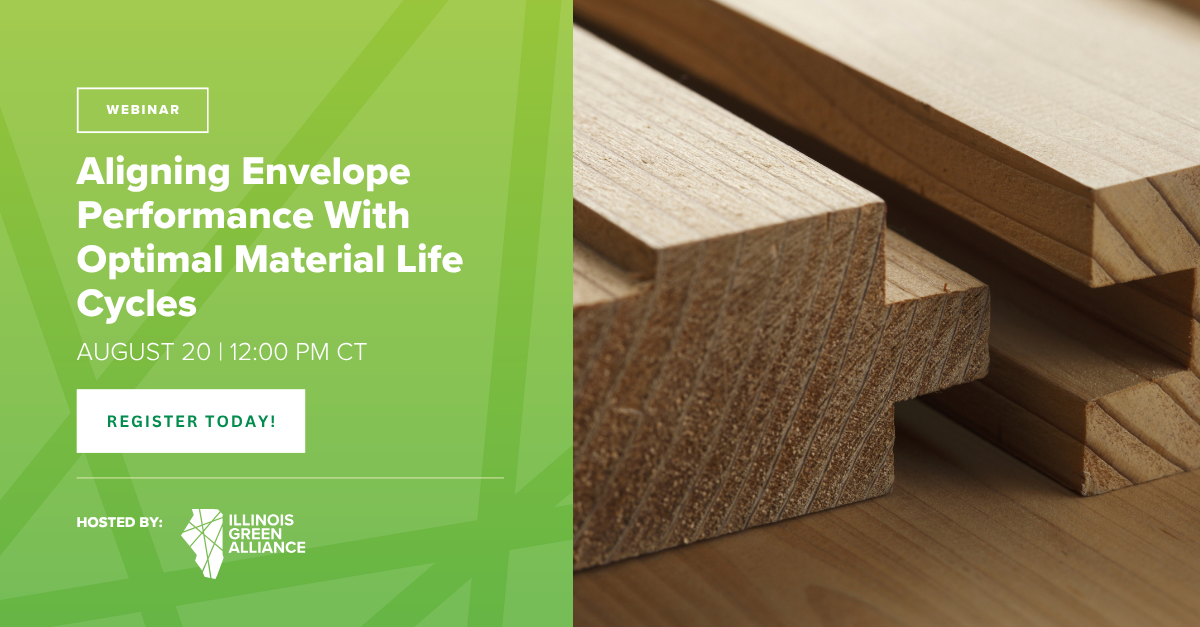
Aligning Envelope Performance With Optimal Material Life Cycles
Join Illinois Green for a virtual education program exploring the relationship between facade performance and life cycle impact — and how project teams can strike the right balance between the two. A building's facade is critical to its energy efficiency, occupant comfort, and long-term durability, but the materials that make up the building envelope carry significant environmental impacts of their own. This session takes a deep dive into the building control layers (thermal, water, vapor, and air) and follows envelope materials across their full life cycle, from raw resource extraction through manufacturing, transportation, installation, in-use maintenance, and end-of-life disposal or recycling.
Facade materials vary widely in embodied carbon, greenhouse gas emissions, and potential for recyclability or reuse — and the trade-offs matter. By contrasting the positive attributes of common facade materials—including durability, water protection, thermal performance, recyclability—with their negative impacts, designers can make more informed choices that minimize environmental burdens.
HUSARCH will also introduce aspects of LEED that relate to the building envelope, including the Materials and Resources credits and enhanced commissioning, along with a look at embodied carbon and other chemicals identified on HPDs. Together, we'll weigh building science against environmental responsibility and learn how project teams can balance operational efficiency with lifetime environmental impact.
Learning Objectives:
- Evaluate how building façade materials influence the overall building life cycle and environmental performance.
- Compare the benefits and limitations of commonly used building control layer materials.
- Apply material tracking strategies to support third-party certification programs, including LEED.
- Evaluate the performance of building materials using testing methods and performance data.
Speakers:
Mac Carroll, BECxP, CxA+BE, ICC Accessibility Plans Examiner,
Sustainability and Architecture senior Lead,
HUSARCH
Chyanne Husar, AIA, LEED BD+C, BECxP,
Founder/CEO,
HUSARCH