Illinois Green Policy Update: March 2026
Welcome to the March edition of the Illinois Green Policy Update. We're incredibly excited to share some important updates about our local outreach, bills in Springfield, state renewable energy progress, and more!
Illinois Green Kicks Off Local Clean Building Outreach
Earlier this year, Illinois Green kicked off our local outreach through the Illinois Clean Building Commitment with three all-electric retrofit tours in Champaign, Macomb, and Carbondale.
These tours connected over 75 people including several local policymakers with building energy solutions and education on policy that supports clean communities.
To get a sense of these tours, there’s a great video highlighting our recent tour in Champaign:
We’re looking to reach even more communities and local leaders with tours of high-performance projects. Share ideas for tour projects with Ryan Wilmington. Thanks to our awesome partners at IL PIRG, Build Equinox, Faith in Place, Prairie Rivers Network, Sierra Club Shawnee Chapter, and Carbondale Unitarian Fellowship for helping make these tours possible.
Green Building Legislation in Springfield
The Illinois General Assembly is underway and considering several bills relevant to the state’s building industry.
POWER (Protecting Our Water, Energy, and Ratepayers) Act (SB4016/HB5513)
Illinois has been home to a data center boom with over 230 of these facilities already operating in the area and many more planned. This massive build-out has raised questions about the impact of data centers, from increasing grid strain to rising ratepayer costs, water use, and the impact to the state’s climate goals.
A proposal from the Illinois Clean Jobs Coalition seeks to put guardrails on these facilities and ensure clean energy and energy efficiency investment. The POWER Act would require new data centers to develop “Bring Your Own New Clean Capacity and Energy” (BYONCCE) Supply Plans, and allow data centers that invest in clean energy to “jump the line” for faster grid connection, while requiring these facilities to pay into a public benefits and affordability fund.
Read more here:
Plug-In Solar
And here’s a fun one — a new bill could allow your balcony to turn into a mini clean energy plant. Plug-In solar systems, or balcony solar, are small-scale, behind-the-meter systems that are often installed on a balcony and plugged directly into a standard power outlet. Because plug-in solar systems are small, easy to install, and don’t have to wait on grid connection approval, they can make clean energy accessible to many more people, including renters and condo dwellers. Legislation filed recently in Springfield (SB3104/HB4524) would allow for the installation of these systems of up to 1200 Watts and also prevent utilities, municipalities, and landlords from requiring permits or placing restrictions on these systems.
Learn more about plug-in solar here:
Balcony solar is taking state legislatures by storm | Canary Media
Utility Data Access
Energy benchmarking is often the step towards decarbonization because you can’t reduce what you don’t measure. Unfortunately, it is often challenging for owners or operators to access whole-building data. During the last legislative session, Illinois lawmakers passed a law requiring electric utilities to share this data and now a similar proposal is being put forward for gas utilities.
Illinois Green will track these bills as the Spring session advances forward. Building professionals voices are important on policies like these. Consider lending your voice in support by contacting their legislators and sharing their opinion and expertise as a member of the industry.
Energy Efficiency Could be the Easiest Way to Fix Grid Demand Challenges
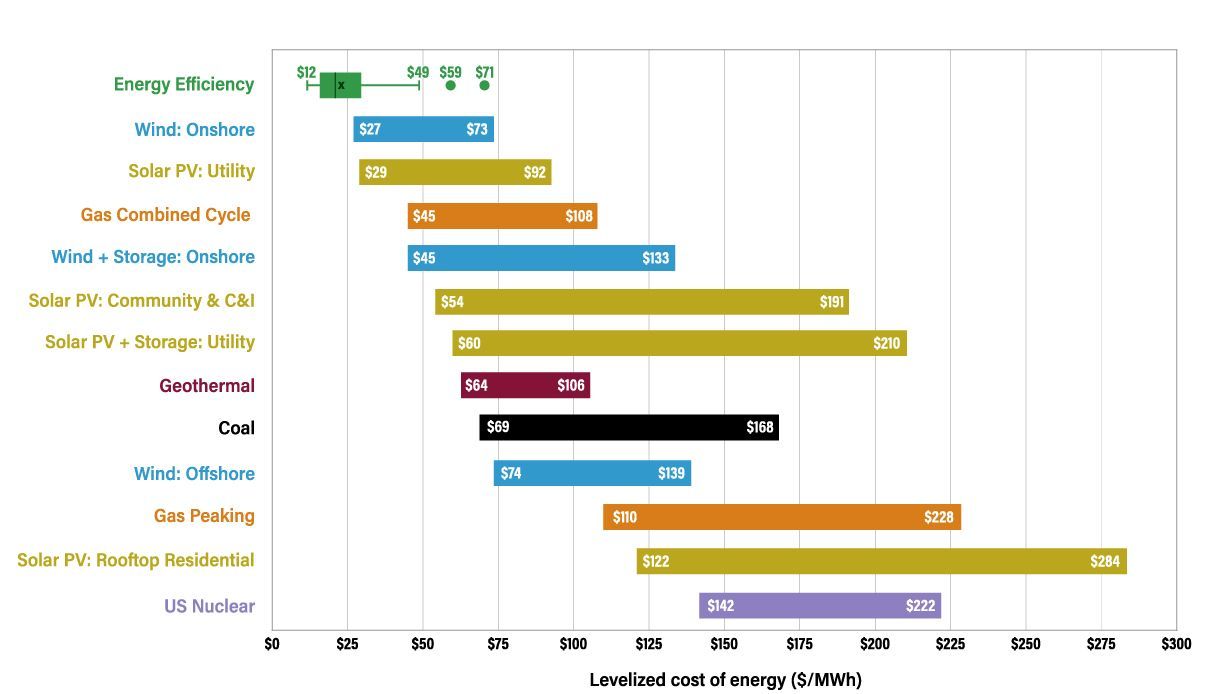
As energy demand grows and costs rise, a good question for building professionals to consider is: "What is the fastest and most affordable way to deal with this challenge?"
Analysis from the American Council for an Energy-Efficient Economy (ACEEE) reflects the long-held belief of our members; that investing in energy efficiency could be the easiest, and most cost-effective pathway to do so. The research shows that these investments could reduce national electricity consumption by 8% equivalent to around 70 GW at peak demand. This reduction could be achieved at an estimated $21/MWh, radically lower than the $76.5/MWh cost associated with adding new gas plants.
Read more here:
Solar is Scaling Up Across Illinois
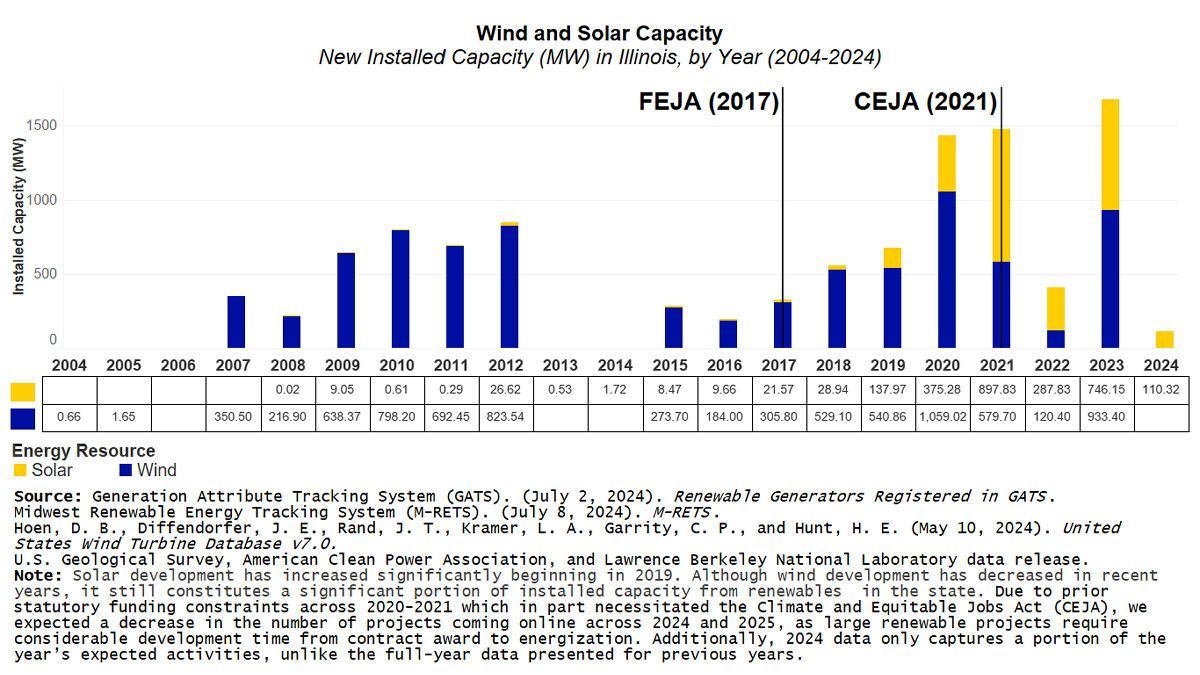
Driven by nation—leading clean energy policies like the Future Energy Jobs Act (2017) and the Climate and Equitable Jobs Act (2021), Illinois is seeing a major boom in new clean energy. Before 2017, Illinois had only 80 MW of solar across the state. By the end of Q1 2025, we reached 6,187 MW across more than 121,000 projects! Another highlight – over 40,000 Illinois households are a part of the community solar program.
Learn more at the Illinois Power Agency’s Clean Energy Dashboard: cleanenergy.illinois.gov
In Other Sustainability News
Graduates of Illinois clean energy workforce program gain a vision — and skills for the future
Read more –
Chicago Tribune
Illinois’ new renewables plan compensates for OBBBA losses
Read more –
Utility Dive
From Poverty to Power in Pembroke
Read more –
Rocky Mountain Institute
Oil and gas workers find an easy segue into geothermal jobs
Read More –
Canary Media
Aurora City Council OKs loan program for sustainable building upgrades
Read More –
Chicago Tribune
Get news and policy alerts by email! Sign up for our new newsletter!
The new Illinois Green Policy Newsletter will bring this monthly update, feature stories and timely advocacy action alerts directly to your inbox. Sign up to stay up to date on the latest local sustainability policy news and the ways you as a building professional can use your expertise make a difference.