Net Zero Building Case Study: The Campus Instructional Facility at the University of Illinois Urbana-Champaign

June 24, 2024

Heated and cooled by the largest geothermal energy system on campus

Project Overview

Completed in 2021, the Campus Instructional Facility (CIF) received LEED Zero Energy and LEED BD+C NC Platinum certifications. The project has also achieved net zero operational carbon. 


Project Team

  • Developers: Vermilion Campbell
  • Architectural Design & Structural Engineering: Skidmore, Owings & Merrill
  • MEP Engineering: dbHMS
  • Civil Engineering: David Mason & Associates
  • General Contractor: Pepper Construction Company.
  • Energy Modeler: DataBased+


Download a PDF of this Case Study

The Campus Instructional Facility (CIF) at the University of Illinois Urbana-Champaign is a 124,000-square-foot center for flexible learning. The building, completed in 2021, has received LEED Zero Energy and LEED B+D NC Platinum certifications, contributing to the University's Climate Action Plan to achieve net-zero greenhouse gas emissions across campus by 2050.


Complete with 23 classrooms, a 500-person auditorium, a cafe, and an open space with flexible partitions, the building serves as a hub for teaching, with a focus on collaboration and new technologies for hands-on learning. 


Powered by UIUC’s Solar Farm, the building uses a radiant heating and cooling system, integrated with the largest geothermal energy system on campus. The University partnered with developer Vermilion Campbell in a public-private partnership (P3) project publicly funded through a bond transaction. The University’s Student Sustainability Committee also contributed $375,000 toward the project’s geothermal exchange system. 

A quote from chris dillon in a speech bubble

Public-Private Partnership

As a P3 project, the University hired private companies to deliver the public facility. The Illinois Finance Authority issued bonds to finance the building, while outside firms designed, developed, and constructed the CIF. The financial model allowed the private sector developer to implement ambitious sustainability goals in an innovative manner.
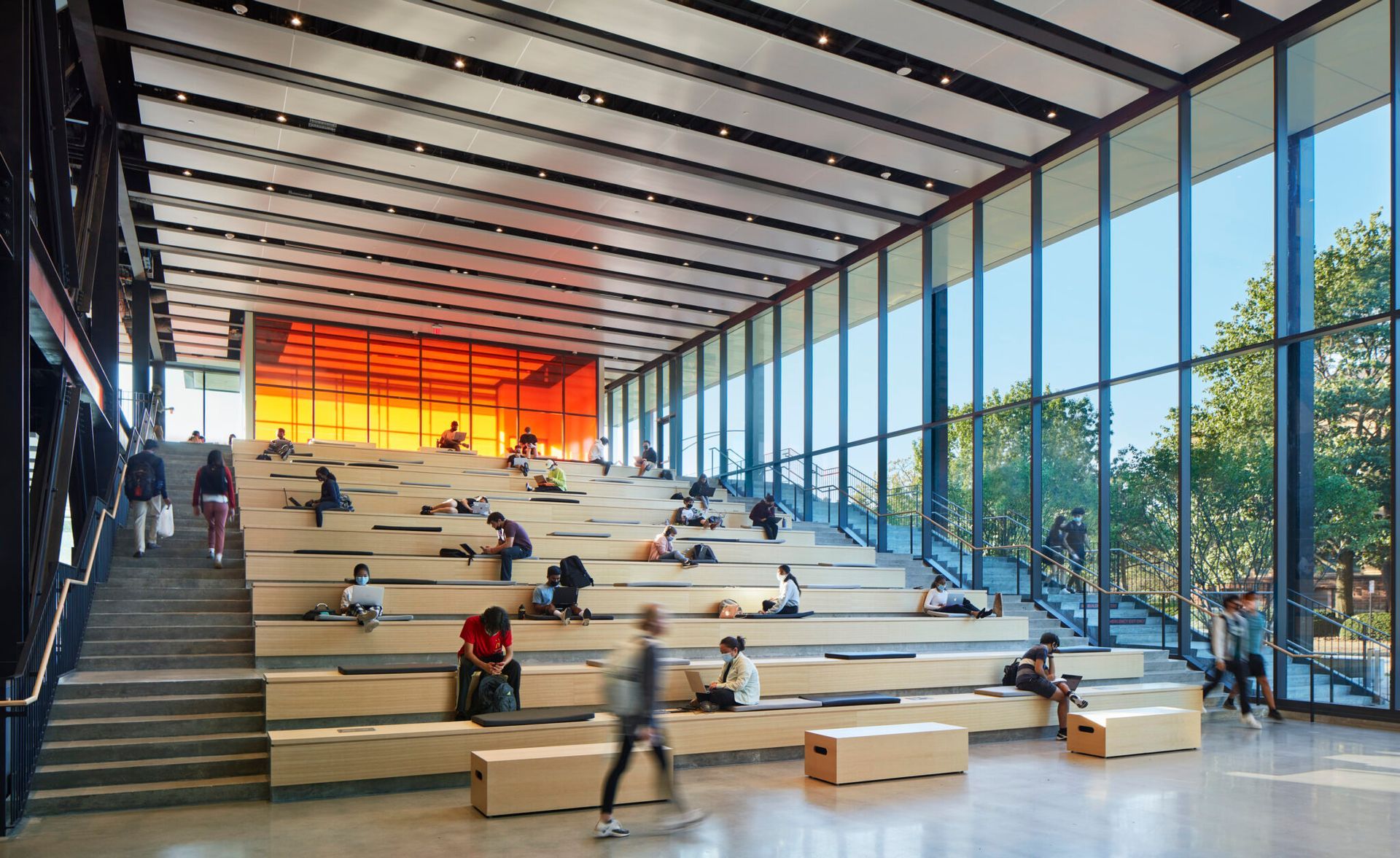
A group of people are sitting on wooden benches in a large building.

How did the University use geothermal energy to reach LEED Platinum?

Initially the University had sought to achieve LEED Gold certification, but the project’s geothermal exchange system allowed the team to push for LEED Platinum and beyond, all within budget. Prior to the CIF project, University faculty and students had explored the feasibility of incorporating an underground geothermal exchange beneath the Bardeen Quadrangle, which could reduce the overall usage of energy on campus. Upon learning of this research, the project team collaborated with the University faculty and students to implement their vision, developing an expandable geoexchange under one of the most significant campus public spaces.
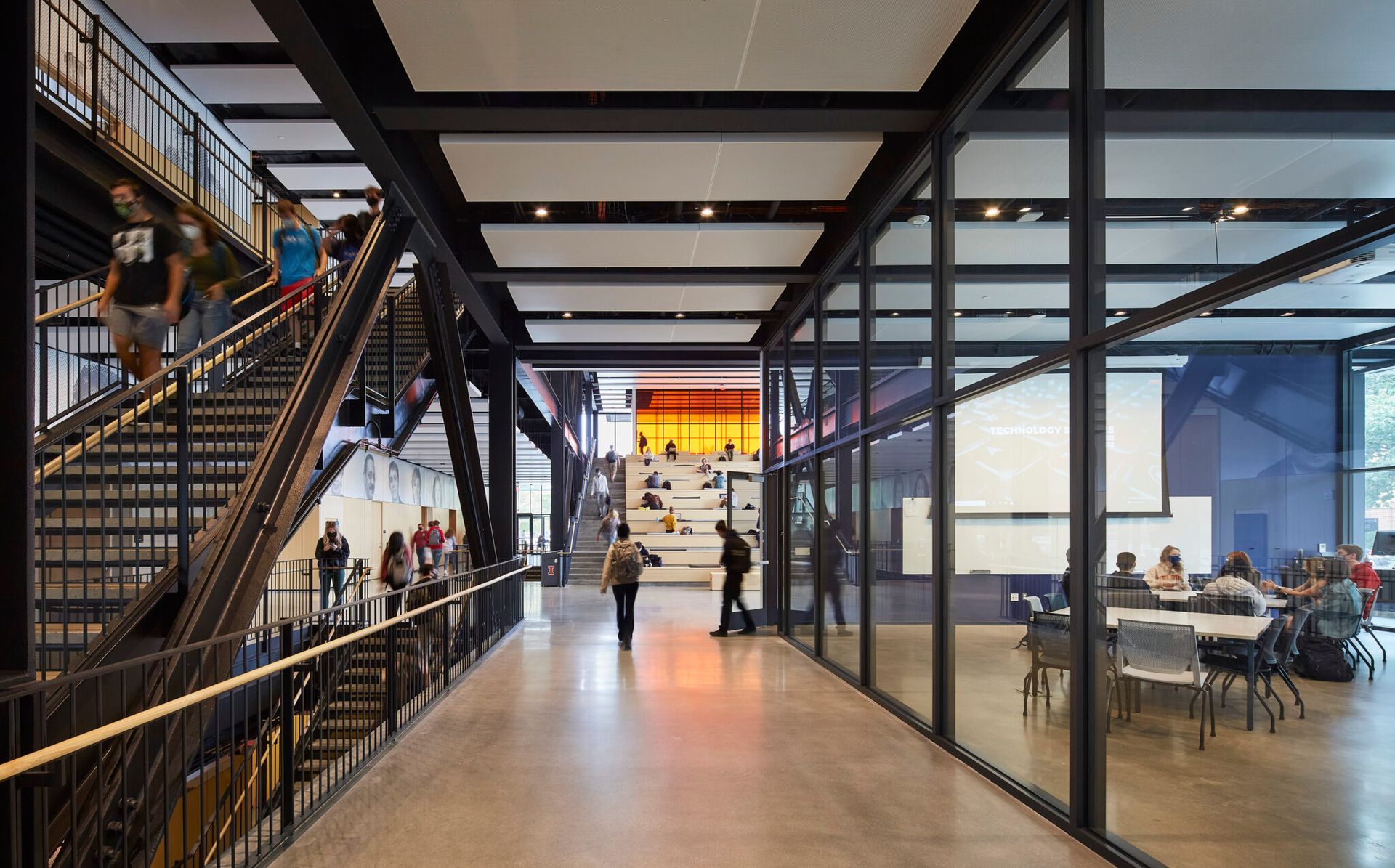
A group of people are walking down stairs in a building.

Designed to illustrate sustainable engineering

As a living laboratory, CIF puts engineering on display. Components like the geothermal heating and cooling system, electrochromic windows, and low-VOC materials allow students and faculty members to experience its sustainable features. “Professors can actually look at the building in a class and point to different components of the building in their teaching methodology,” said Doug Reddington, Associate Director of Real Estate Services at UIUC.
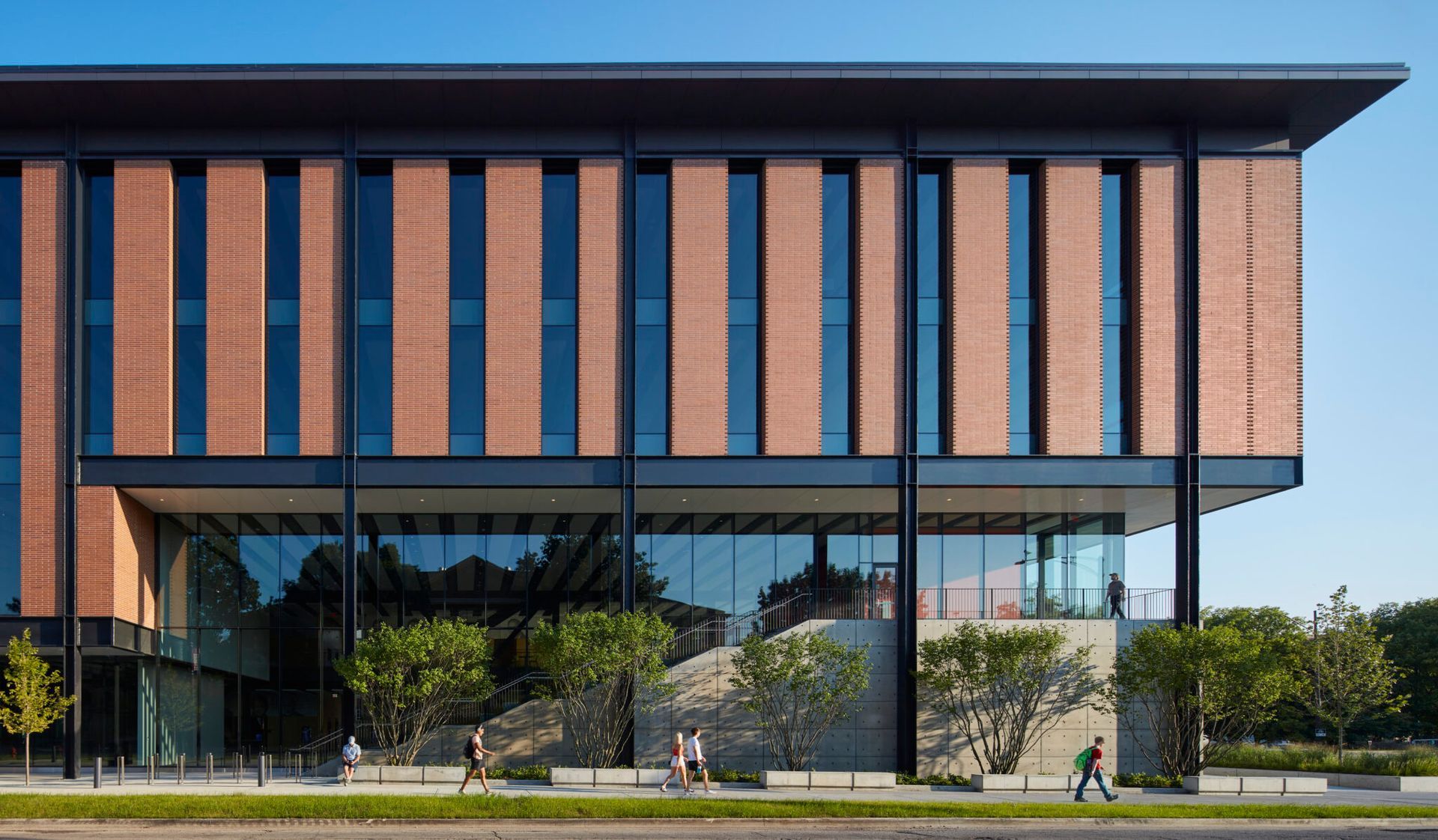
A large brick building with a lot of windows and people walking in front of it.

Geothermal energy heats and cools building

The heating and cooling system, comprised of 40 geothermal wells at 450 feet deep each, allow the building to use the ground as an annual thermal battery. The geo-exchange wells, coupled with heat pumps, desiccant dehumidification systems and radiant ceiling panels, help reduce the building’s energy consumption by 65% compared to a traditional building system.
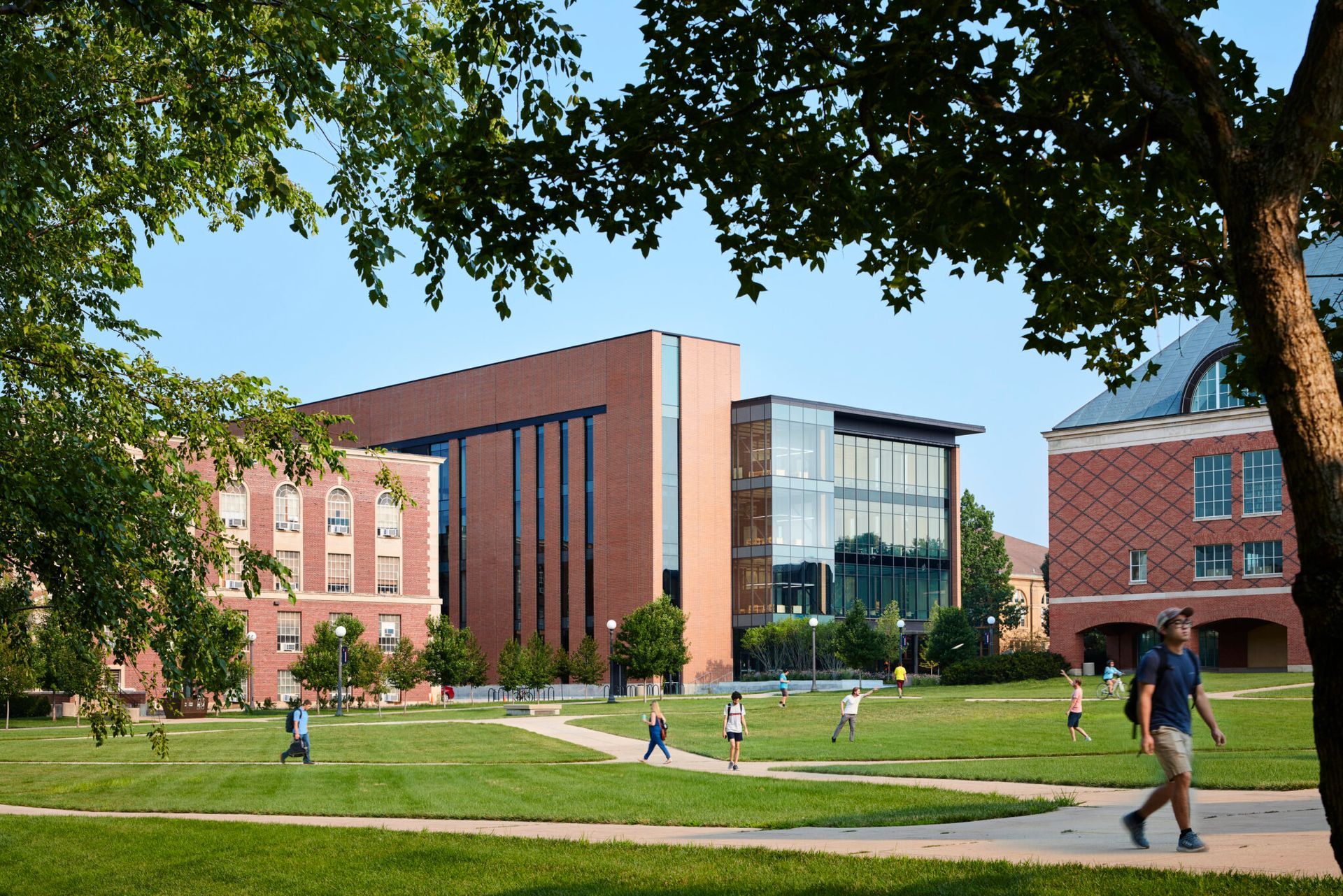
A group of people are walking through a grassy field in front of a large brick building

A new approach to on-campus energy production

The geothermal exchange created for CIF is a scalable source of energy, meaning it could potentially support other buildings on the Bardeen Quadrangle, said Chris Dillion, President & CEO of Vermilion Campbell. Currently, the geothermal well field encompasses about one-third of the quad, but as the university renovates more buildings in the future, this energy source could be expanded. 
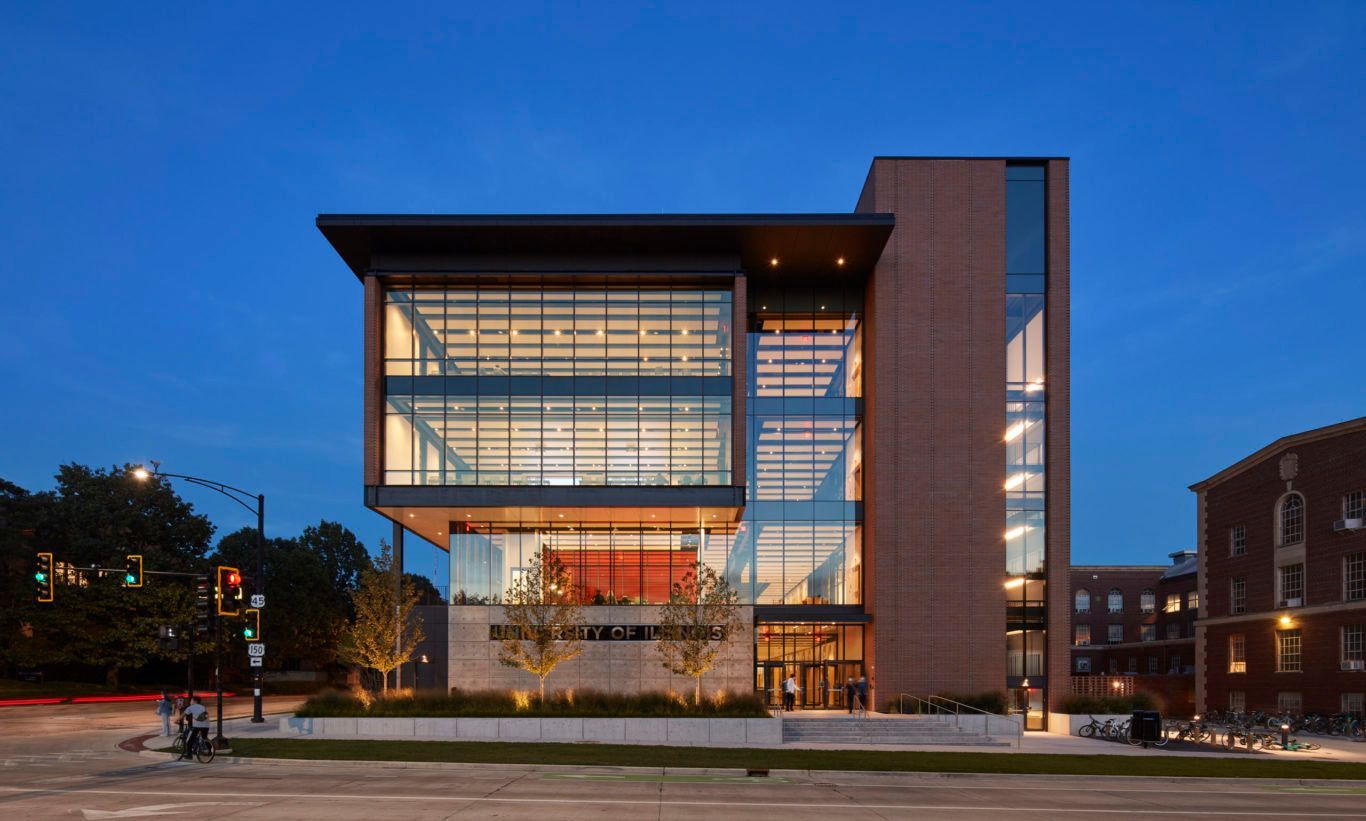
A large building with a lot of windows is lit up at night.

Student committee grant made project possible

UIUC’S Student Sustainability Committee consists of a group of undergraduate and graduate students who allocate $1.59 million annually toward the development and seed-funding of environmental projects. Their fund is financed through the collection of two student initiated fees, the Cleaner Energy Technologies Fee and the Sustainable Campus Environment Fee. The Campus Instructional Facility received $375,000 in support of the geothermal exchange.

By Ryan Wilmington January 23, 2026
Five years ago, Illinois Green Alliance launched a new strategic plan with a bold north star to guide our work: to make net zero buildings feasible, affordable, and so commonplace that every building in Illinois was net zero by 2050. Mainstreaming the technology and building methods, whether new or existing, is no easy feat. But we realized no one was better positioned to make it happen than green building professionals.Our focus over the last five years have been about laying the foundation necessary to meet our long-term vision and I’m excited to share the progress we’ve made. These past five years have been guided by three pillars: ● Educating industry professionals to ensure they have the expertise to use net zero building methods in their work and can help us raise awareness about their value with building owners and policy makers. ● Removing barriers by providing information about the technical, financial, social and policy roadblocks to net zero adoption and passing new laws that help to overcome these barriers. ● Demonstrating it can work everywhere by collaborating with building types in historically underinvested communities that are considered difficult to implement net zero methods. That focus has paid off, allowing us to meet many of the goals we set for our work across all of our strategies. For example:
By Ryan Wilmington January 16, 2026
At the start of 2025, I told our members that we can build a movement of green building advocates that can continue the progress made in Illinois for high-performance building, regardless of what happens in Washington D.C. Over the last year, you’ve proven me right. While elsewhere green building and clean energy goals have been put on pause, Illinois has continued the fight and won three huge victories that usher in historic investment in clean energy and green buildings and raise the bar for building performance, completely changing the landscape for what is possible in this industry. 
By Twyla Neely-Streit December 16, 2025
he mission of the Illinois Green Schools Project (IGSP)—our year-long school sustainability action and recognition program--is to empower educators, school administrators, students, and school communities to create healthy, sustainable learning environments. This work requires passion, collaboration, and informed support, and as an IGSP program coordinator, I’m always on the lookout for opportunities that help schools build the knowledge and connections needed to drive meaningful, lasting change in their buildings and districts. The Green Schools Conference has long been one of the most impactful gatherings in this space. Its focus on the intersection of environmental health, sustainability, and education makes it a uniquely valuable event for anyone working to make schools healthier and greener places for students to learn and grow. From educators, administrators, and district representatives to facilities managers, students, and community organizations, the Green Schools Conference is a powerful space to learn, collaborate, and fuel your next big idea. This year’s conference promises a rich lineup of workshops, education sessions, and networking and recognition events that speak to the needs and realities of today’s school sustainability landscape. Districts across Illinois are navigating shrinking budgets, aging infrastructure, and a newly passed state-wide law requiring the inclusion of climate education in public school curriculum starting in 2026. Therefore, I’m particularly excited to see sessions on the agenda exploring climate action and resilience planning, opportunities to connect students to sustainability career pathways, and environmental literacy in classrooms. These conversations are essential as programs like the Illinois Green Schools Project continue evolving to support schools in setting goals, tracking progress, and engaging diverse communities in sustainability work. If you’re considering attending this year, I encourage you to take a look at the agenda and explore the sessions that could support your school or organization’s goals. You’ll find no shortage of practical insights, creative ideas, and meaningful connections. I know those who attend will come away with the same clarity, inspiration, and sense of comradery that have made past conferences so influential for myself and others in the Illinois school sustainability community.
More Posts