Sustainability Case Study: Revolution Brewing Rooftop Solar Expansion
Project Overview
Location: Chicago — 3340 N. Kedzie Ave.
Owner: Josh Deth, Revolution Brewing
Project Type: Rooftop solar expansion
Solar Installer: Windfree Solar
Status: Completed 2025
System Specifications
Total system capacity: 180 kW
2025 expansion: 120.42 kW DC
Modules: 223 Longi Solar LR5-72HPH (540 watts each)
Inverter: SolarEdge smart inverter (grid communication)
Battery storage: None (grid-tied)
Mounting system: Fully ballasted, zero roof penetrations
Roof type: Commercial flat TPO
Array footprint: Approximately 7,190 sq ft
Permitting: City of Chicago Standard Permit process
Environmental Impact
Annual energy generation: 158,547 kWh
Electricity offset: Approximately 20% of facility usage
Annual CO₂ reduction: Approximately 176 tons (combined system)
Equivalent to: The annual electricity use of 33+ homes
Distinction: Among the largest brewery solar installations in Illinois
Financial Incentives
- 30% Federal Investment Tax Credit (ITC)
- 10% Energy Community Bonus Credit bonus (on top of ITC)
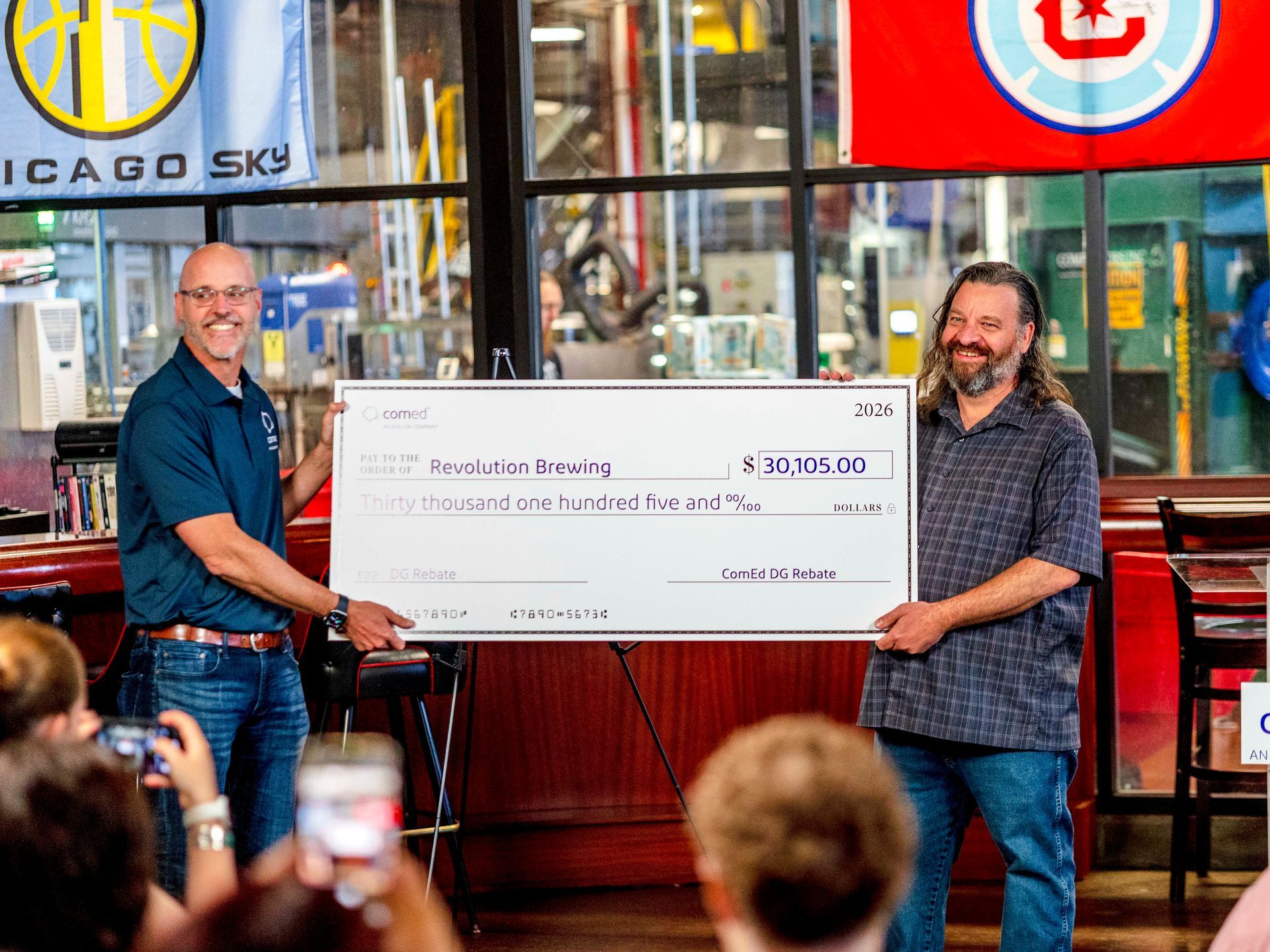
- $30,000 ComEd Distributed Generation rebate (first participant in the ComEd Breweries Pilot)
- Illinois Solar Renewable Energy Credits (SRECs): $9,828.66
Total incentives and credits: $170,000
Note: Federal commercial solar incentives are scheduled to change after July 4, 2026. Illinois businesses that complete installations before this date can lock in the current structure.
Background
Revolution Brewing is Illinois’s largest independently owned craft brewery, and it brews exclusively in the City of Chicago. At its Avondale production facility, the company has spent years building sustainability into the way it operates — from wastewater diversion and recycling to a rooftop solar array first installed roughly eight years ago. That original system did exactly what the brewery hoped: it paid for itself over time and demonstrated that on-site solar could be a dependable, long-term energy strategy rather than a one-time gesture.
As energy costs climbed, Revolution decided to build on that early success. The brewery returned to Chicago-based Windfree Solar — an Illinois Green Alliance partner — to triple its existing capacity. The result is a 180 kW rooftop system that ranks among the largest brewery solar installations in the state. It also earned Revolution a notable distinction: the brewery was named the first participant in ComEd’s new Breweries Pilot, a program designed to help breweries, distilleries, and wineries manage rising energy costs through industry-specific efficiency solutions.
Powering Production:
Inside the Expansion
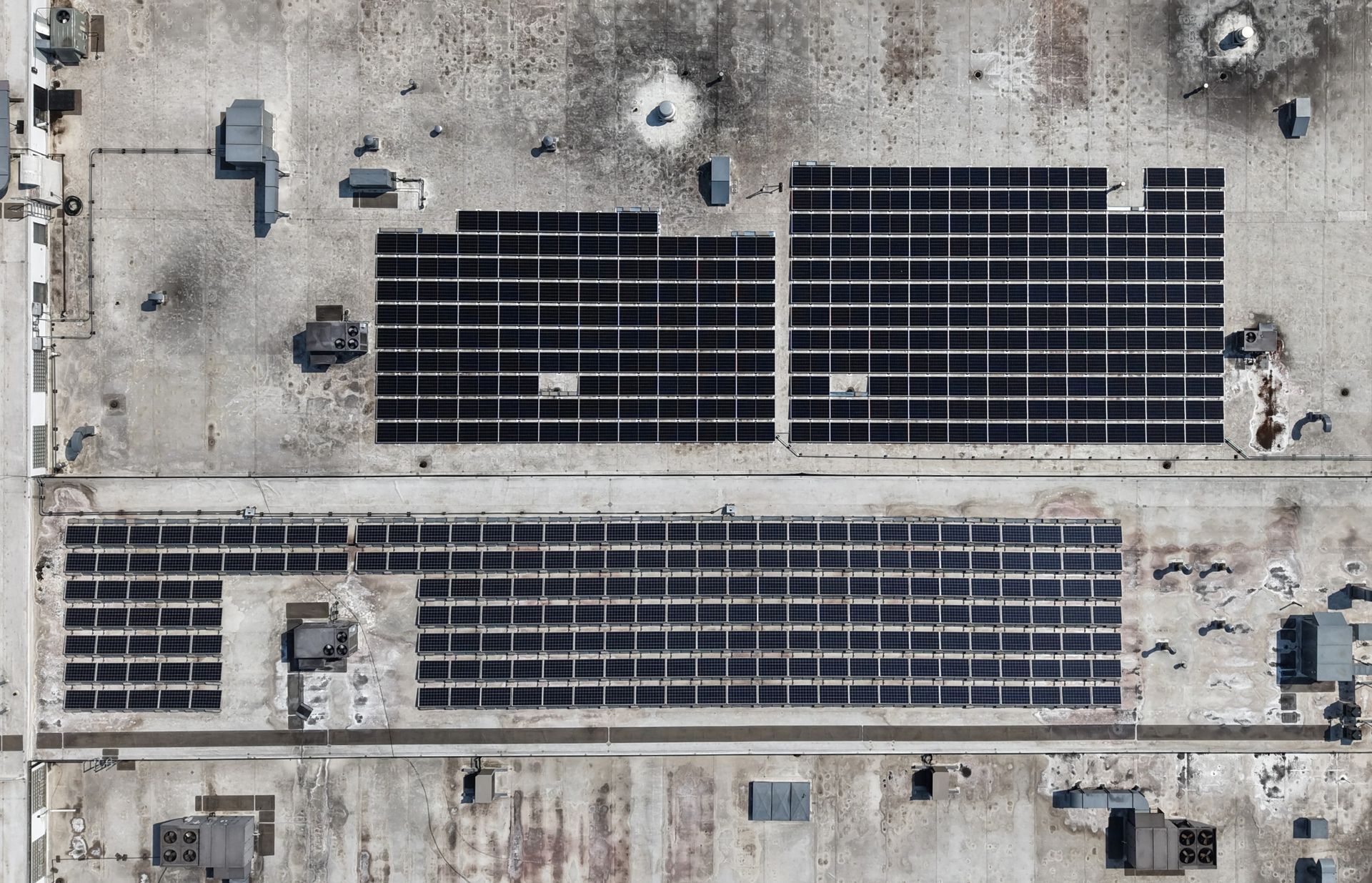
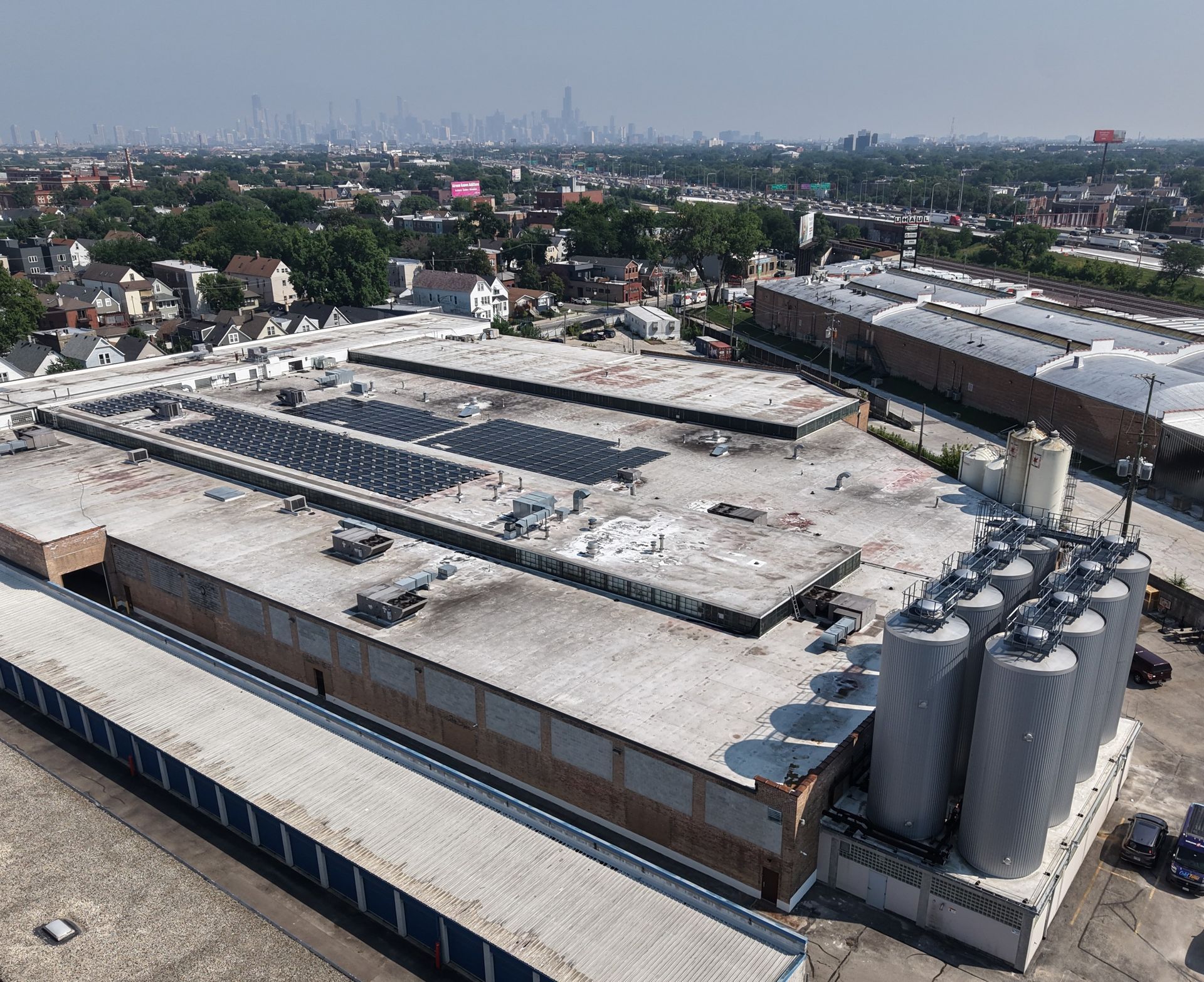
Windfree Solar led the full scope of the project — system design, engineering, utility integration with ComEd, permitting through the City of Chicago’s Standard Permit process, and turnkey installation. The 2025 addition contributed 120.42 kW DC of new capacity: 223 Longi Solar modules rated at 540 watts each, spread across roughly 7,190 square feet of the brewery’s flat commercial TPO roof.
Two engineering decisions stand out for practitioners working on similar commercial rooftops:
- Zero roof penetrations. Windfree specified a fully ballasted mounting system that holds the array in place by weight rather than by drilling into the roof membrane. On a commercial TPO roof, that approach protects the roof warranty, avoids creating new points for water intrusion, and keeps long-term maintenance simple.
- Smart inverter technology. The system runs on a SolarEdge smart inverter that communicates directly with ComEd’s grid — a requirement for the utility’s Distributed Generation rebate and a feature that allows the array to support grid stability when needed. The grid-tied system has no battery storage; it feeds the brewery’s daytime production directly.
Together, these choices reflect a practical, low-risk way to scale rooftop solar on an active production facility — one that keeps the brewery running while steadily expanding its clean energy footprint.
Stacking the Incentives
A project of this scale comes together because several incentives work in combination. For the Revolution expansion, the stack included a 30% Federal Investment Tax Credit, an Energy Community adder of up to 10%, a $30,000 ComEd Distributed Generation rebate awarded as the first participant in the ComEd Breweries Pilot, and Illinois Solar Renewable Energy Credits (SRECs).
For a system this size, that combined stack can substantially reduce upfront costs and shorten the payback period. Timing matters, though. Federal commercial solar incentives are scheduled to change after July 4, 2026, and Illinois businesses that complete installations before that date can lock in the current structure — a planning point worth flagging for any owner weighing a similar investment.
Measurable Impact
The expanded array generates an estimated 158,547 kWh per year, offsetting roughly 20% of the facility’s electricity use — and its electric bill. Combined with the original installation, the system now avoids approximately 176 tons of CO₂ annually, equivalent to the yearly electricity use of more than 33 homes. The expansion makes Revolution’s array one of the largest brewery solar installations in Illinois.
“Revolution is proud to brew only in the City of Chicago, and we continue to make long-term investments in our brewery to reduce our carbon footprint and improve our energy efficiency. Tripling our rooftop solar array is a major step in our greater commitment to the environment, alongside other green initiatives like wastewater diversion and recycling.”
— Josh Deth, Owner, Revolution Brewing
Lessons Learned
For the broader Illinois building community, the Revolution Brewing expansion offers a few clear takeaways:
- Proven ROI builds confidence. The decision to expand rested on nearly a decade of real performance data from the brewery’s first system. When solar has already paid for itself once, scaling up becomes a straightforward business decision rather than a leap of faith.
- Incentives reward early action. Layering the federal ITC, the Energy Community adder, the ComEd rebate, and Illinois SRECs meaningfully improved the project economics. With federal incentives set to shift after July 4, 2026, owners who move now can capture the most favorable structure.
- The right partner reduces risk. By handling design through installation in-house, Windfree Solar gave Revolution a single point of accountability and navigated the complex utility integration with ComEd — a key reason the brewery returned to the same partner for its expansion.
- Sustainability and operations reinforce each other. A ballasted, penetration-free array and a smart inverter let the brewery cut energy costs and emissions without disrupting production or risking its roof — proof that sustainability and day-to-day operations can work hand in hand.
Revolution Brewing’s expansion shows what becomes possible when an established business, a trusted local installer, and well-timed incentives come together. It’s a repeatable model for breweries — and energy-intensive operations of all kinds — across Illinois looking to lower costs and build a more sustainable future.