High Performance Case Study: Ogden Commons
Project Overview
Location: Chicago, Ill.
Owner: N/A; The Habitat Company (residential)
Developer: Ogden Washtenaw Development LLC (commercial/retail); Ogden Commons JV LLCSC (residential); ASCENT (healthcare)
Architect: Solomon Cordwell Buenz (commercial/retail/residential); Anderson Mikos Architects (healthcare)
MEP Engineer: WSP (residential building A/commercial/retail); dbHMS (residential building B); ESD (healthcare)
Commissioning + Sustainability Consultants: Baumann Consulting
Enclosure Consultants: Baumann Consulting
Construction Type: New Construction
Key Funding Sources
Tax Increment Financing (The Midwest TIF): $9 million allocated for residential phase
Illinois Donations & Grants: $500,000 in state donations
PNC Bank: Provided $15 million for Phase 1 of the $22 million commercial development
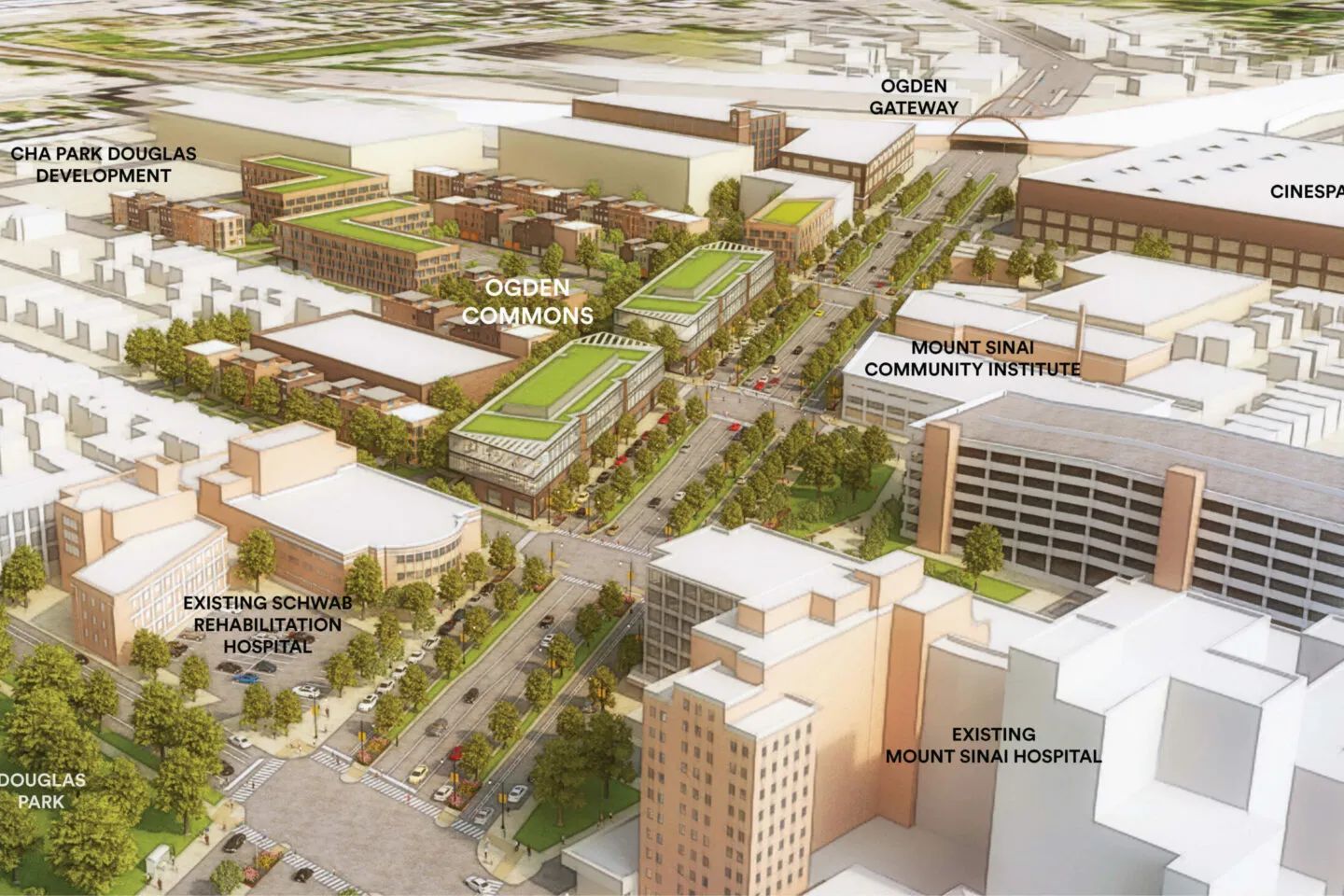
* Project renderings provided by SCB
Background
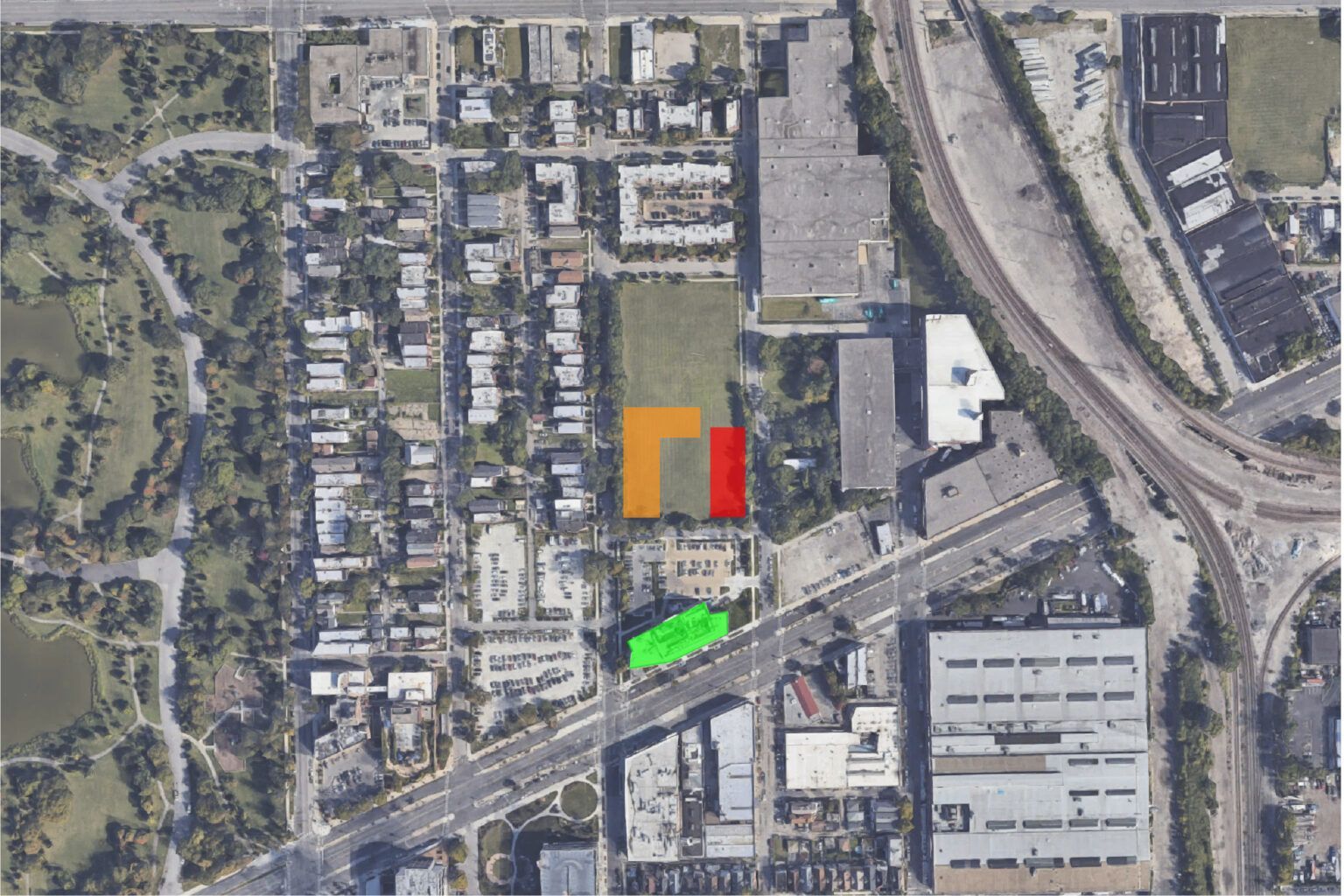
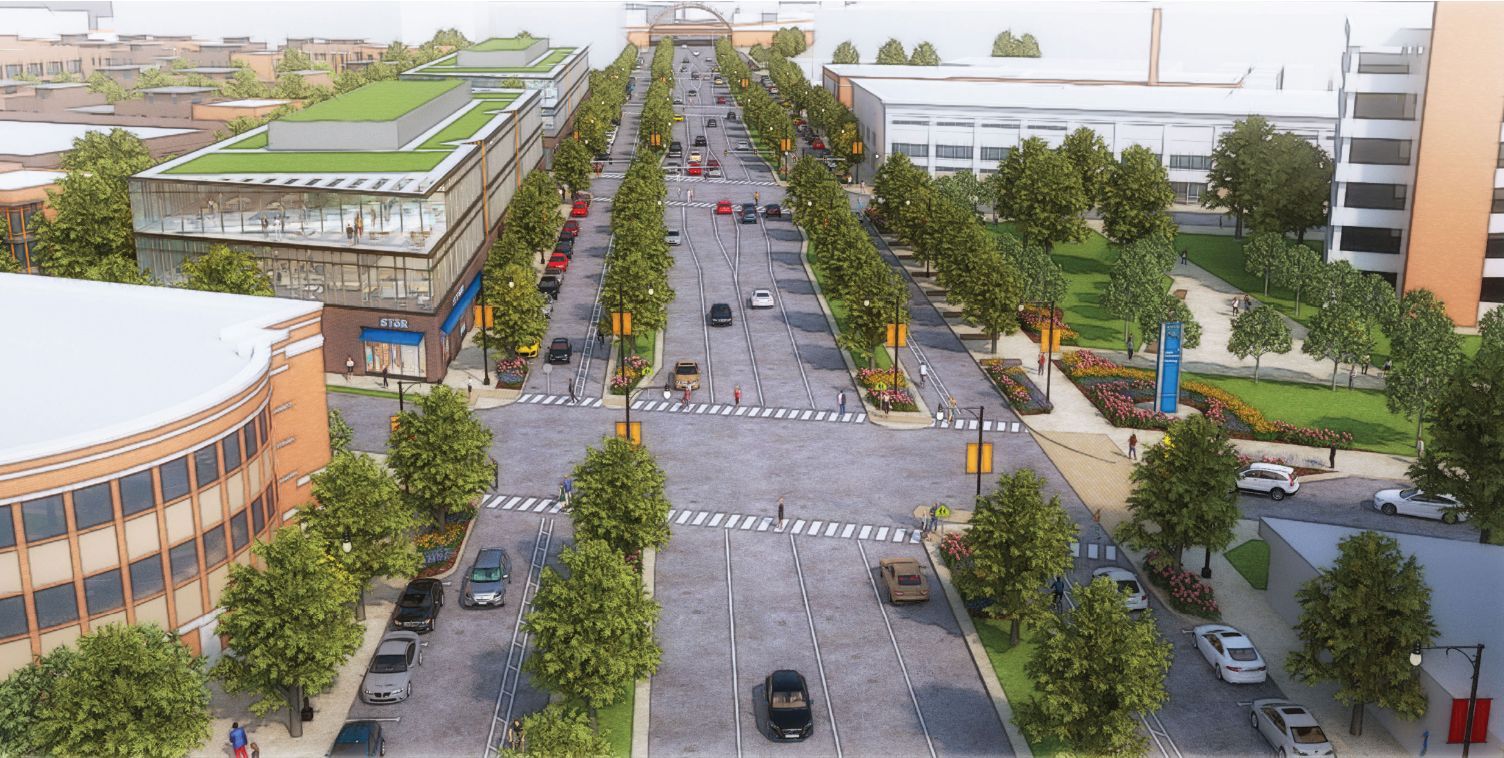
Ogden Commons Corridor is a 10-acre, $200 million mixed-use redevelopment in Chicago’s North Lawndale that replaces the former Ogden Courts public housing complex with a vibrant hub of housing, healthcare, and commerce. The multi-phase program includes commercial space and two multifamily residential buildings alongside Sinai Chicago’s healthcare facilities.
Guided by the City of Chicago’s Sustainable Development Policy (SDC), this corridor has incorporated LEED and Green Globes certifications to achieve green building goals. The owner and project partners pursued measurable performance—energy efficiency, durability, indoor environmental quality, and community outcomes—while revitalizing a historically disinvested corridor. Illinois Green partner Baumann Consulting (Baumann) provided commissioning, sustainability consulting, building enclosure testing, and advanced modeling services across phases to ensure the design intent translated into reliable, verified performance during construction and operations.
This case study frames the story of why certification was pursued, what it required from an engineering perspective, and how those requirements shaped integrated decisions from design through construction to deliver consistent outcomes across buildings. Baumann supported this effort across multiple phases, providing commissioning, sustainability consulting, building enclosure testing, and advanced modeling services for:
- Ogden Commons Commercial
- Mount Sinai – Sinai Health System
- Ogden Commons Site A1 - Residential
- Ogden Commons Site A2 – Residential
Integrated Technical Approach from Design Through Construction
The engineering services were intentionally coordinated to advance the same objectives across all phases—efficiency, reliability, durability, and occupant well-being. The approach connected four technical strands: Commissioning (Cx), Sustainability Consulting and Certification Management, THERM Modeling for envelope risk reduction, and Building Enclosure Testing. Each discipline reinforced the others, creating a feedback loop from design to field execution and handover.
Commissioning: Ensuring Performance, Reliability, and Quality
Commissioning (Cx) is more than testing—it’s a proactive process that ensures systems perform as intended. Across the Ogden Commons development, Baumann provided LEED and Green Globes-compliant commissioning services for HVAC, electrical, and building envelope systems. By identifying issues early, the team prevented costly delays and optimized building performance. Examples include correcting mechanical deficiencies, improving BAS calibration, and ensuring accessibility for maintenance.
Ogden Commons Commercial – LEED Commissioning
Baumann delivered comprehensive LEED v4 Fundamental and Enhanced Commissioning (Cx) for the Ogden Commons Commercial project, ensuring systems operated efficiently and met performance standards. Key contributions included LEED Compliance, including submission of commissioning report to LEED Online in December 2020.
Systems Commissioned:
- Building envelope
- HVAC systems
- Electrical lighting and distribution
- Medical gas and vacuum pumps
- Nurse call technology system
Key Issued Identified:
- Controls & Automation system inefficiencies, safety risks, non-compliance
- HVAC & Mechanical issues including poor air quality, infection control challenges, energy waste
- Electrical Reliability issues relating to life safety and operational continuity at risk
- Accessibility including blocked equipment, missing access panels
- Documentation Gaps issues including conflicting specs, outdated submittals — Baumann reduced delays, compliance issues, future upgrade challenges
Why it Matters:
- Ensures operational reliability, patient safety, and regulatory compliance
- Supports efficient maintenance and energy performance
- Protects critical healthcare functions in a high-stakes environment
Mt. Sinai Surgery Center – Mission-Critical Healthcare Commissioning
Baumann provided fundamental, enhanced, and building envelope Cx for this mission-critical healthcare facility pursuing LEED Silver. The scope extended beyond typical LEED requirements to include specialized systems vital for patient safety and operational continuity.
Systems Commissioned:
- Building envelope
- HVAC systems
- Electrical lighting and distribution
- Medical gas and vacuum pumps
- Nurse call technology system
Key Issued Identified:
- Controls & Automation system inefficiencies, safety risks, non-compliance
- HVAC & Mechanical issues including poor air quality, infection control challenges, energy waste
- Electrical Reliability issues relating to life safety and operational continuity at risk
- Accessibility including blocked equipment, missing access panels
- Documentation Gaps issues including conflicting specs, outdated submittals — Baumann reduced delays, compliance issues, future upgrade challenges
Why it Matters:
- Ensures operational reliability, patient safety, and regulatory compliance
- Supports efficient maintenance and energy performance
- Protects critical healthcare functions in a high-stakes environment
Sustainability Consulting
and Certifications
Ogden Commons incorporates both LEED and Green Globes frameworks to meet sustainability goals across commercial and residential buildings. For both residential buildings A1 and A2, Baumann guided the team through the Green Globes process, obtaining 3 Globes for A1 and targeting 3 Globes for A2.
The Green Globes process requires an on-site assessment by a certified Green Globes Assessor and encourages collaboration and dialogue between assessors and project teams. It also allows for more customized sustainability strategies and has typically lower certification fees and administrative costs. While still maintaining a comprehensive scope evaluating multiple sustainability categories including:
- Energy
- Water
- Materials and resources
- Indoor environment
- Site and project management
- Emissions and effluents
THERM Modeling and Building Envelope Optimization
Energy efficiency begins with a well-designed building envelope. Baumann used THERM modeling to identify and mitigate condensation risks, particularly in areas with thermal bridging. Solutions included closed-cell spray foam to improve insulation continuity and reduce humidity infiltration. These measures enhance occupant comfort and extend building lifespan.
For the residential buildings, Baumann developed and reviewed THERM models for risk of condensation. In collaboration with the architect, Baumann found areas for concern and were able to shed light on the primary cause — thermal bridging introduced by the joint sealant and head flashing, which interrupts thermal insulation continuity.
Building Enclosure Testing
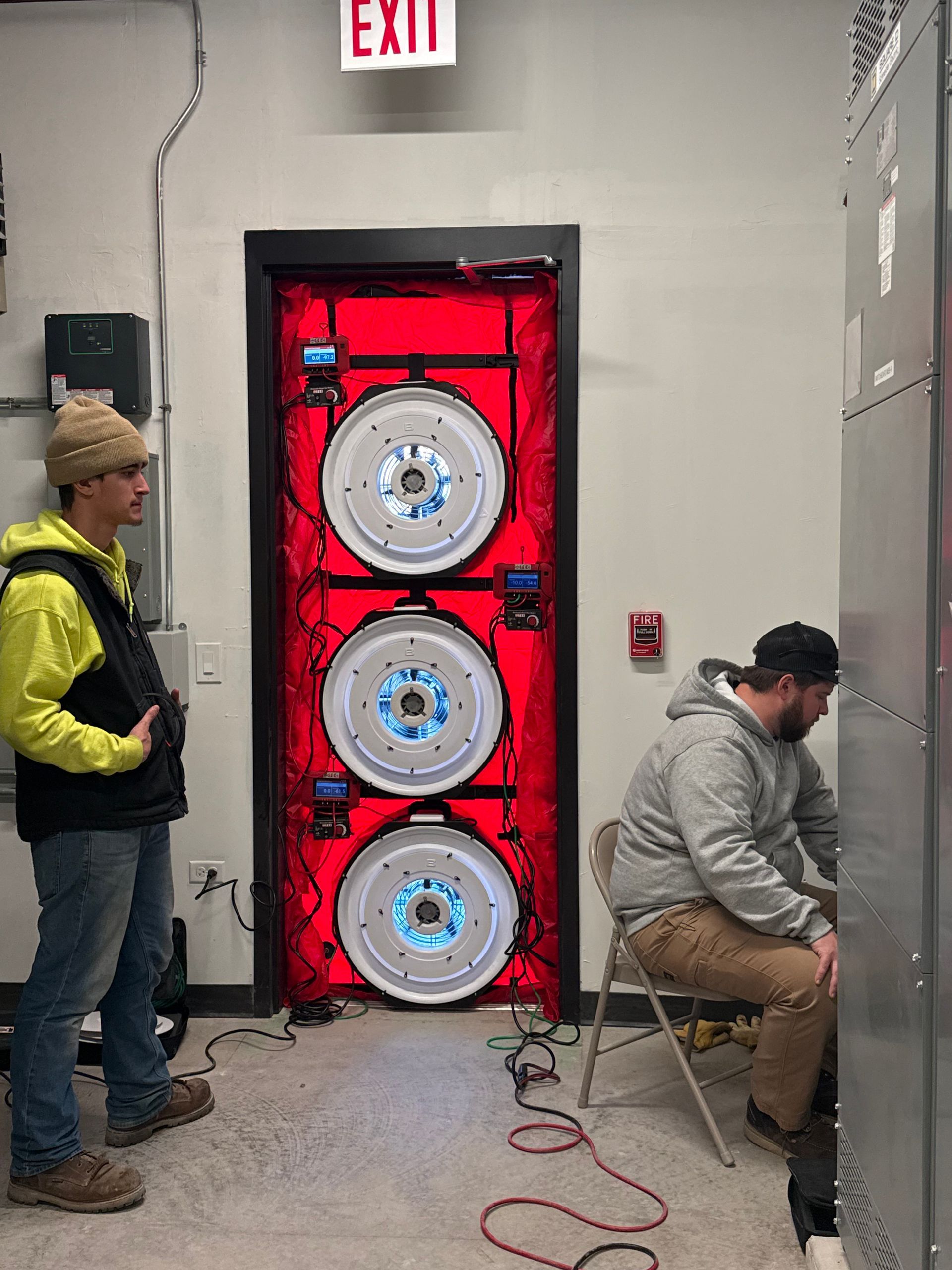
Baumann also witnessed critical building enclosure tests such as blower door testing, adhesion pull tests, and chamber spray evaluations to verify performance and identify corrective actions, including:
- Chamber and spray test on fiberglass windows and fluid-applied membrane mockup
- ASTM D4541 Adhesion pull testing
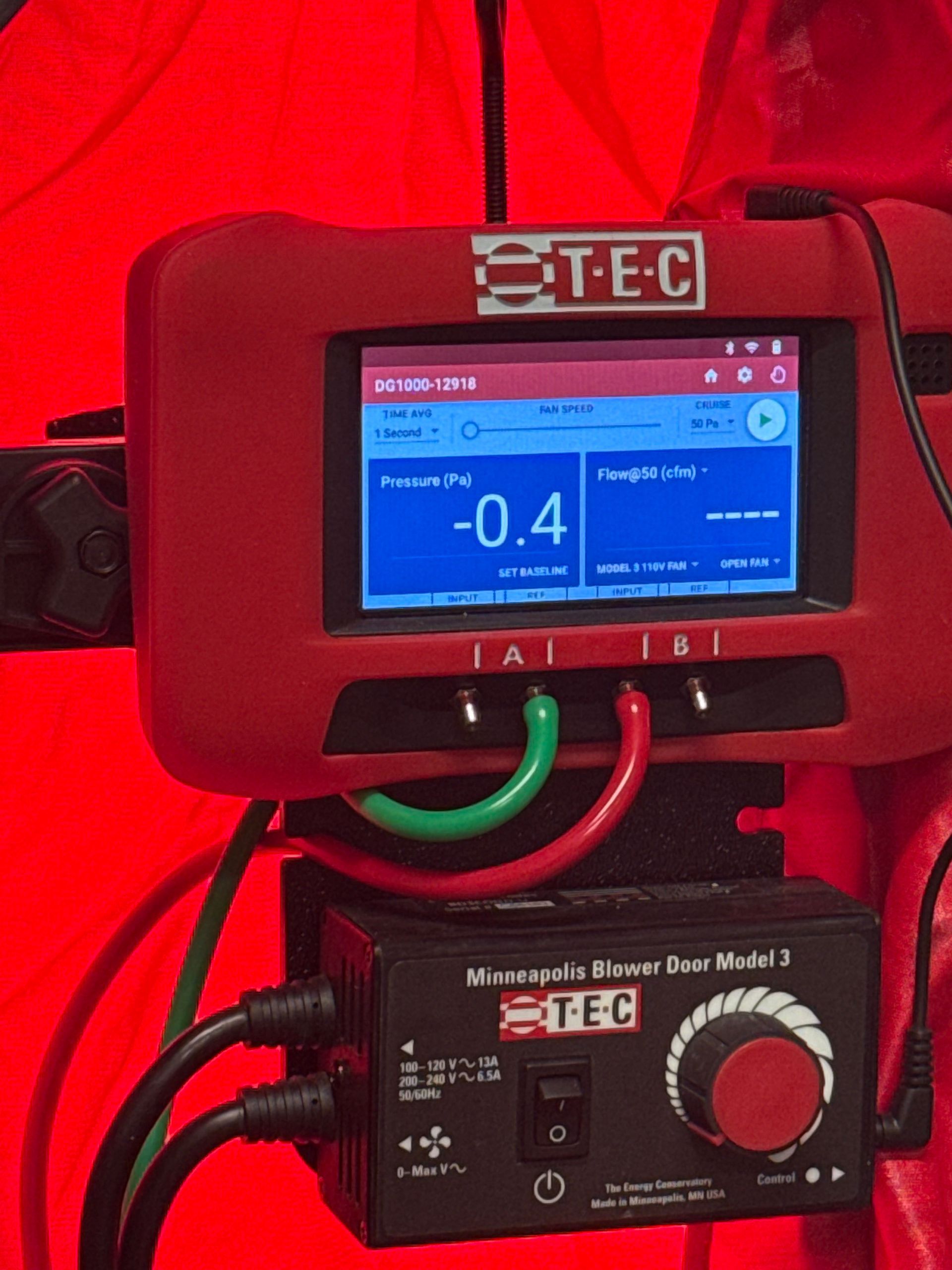
- Blower Door testing
Benefits of Proper Enclosure Testing:
- Improved energy efficiency by reducing air leakage
- Enhanced indoor comfort by reducing drafts and improving humidity control
- Compliance with standards and requirements
- Extended building lifespan by reducing deterioration due to moisture movement
- Improved indoor air quality and reduced pollutant infiltration
Outcomes: Certified Performance and Community Impact
The development delivered third party–verified outcomes—LEED Silver for the commercial building and Green Globes for multifamily—with the healthcare facility pursuing a tailored certification path. Technically, the buildings achieved improved energy efficiency, reduced air leakage, and enhanced indoor environmental quality. Socially, Ogden Commons advanced economic empowerment by supporting minority-owned businesses, creating construction and long-term jobs, and expanding access to healthcare within North Lawndale.
Blower door test result
Target cfm/ft^2 = 0.4 cfm | Actual cfm/ft^2 = 0.077. The measured air leakage rate of 0.077 cfm/ft² is over 5 times lower than the specified maximum of 0.4 cfm/ft².
Lessons Learned
and Repeatability
Ogden Commons demonstrates that certification becomes most valuable when treated as an engineering framework rather than paperwork. Early envelope detailing and testing, integrated commissioning spanning controls and assemblies, and collaborative certification management drove consistent outcomes across diverse building types. The approach is replicable for mixed-use corridors seeking reliable performance and community impact.