How One Illinois Foundation Catalyzed Net Zero Building Growth
The Illinois Clean Energy Community Foundation (ICECF)’s net zero energy building grant has played a significant role in driving the growth of net zero energy buildings in the state of Illinois in the last decade. However, with the grant's resources ending, it is essential to explore and create alternative funding options and strategies to continue the momentum and advance the net zero energy movement. Delve into the impact of the ICECF grant, and the next steps in furthering the development of net zero energy buildings.
The impact of the ICECF grant
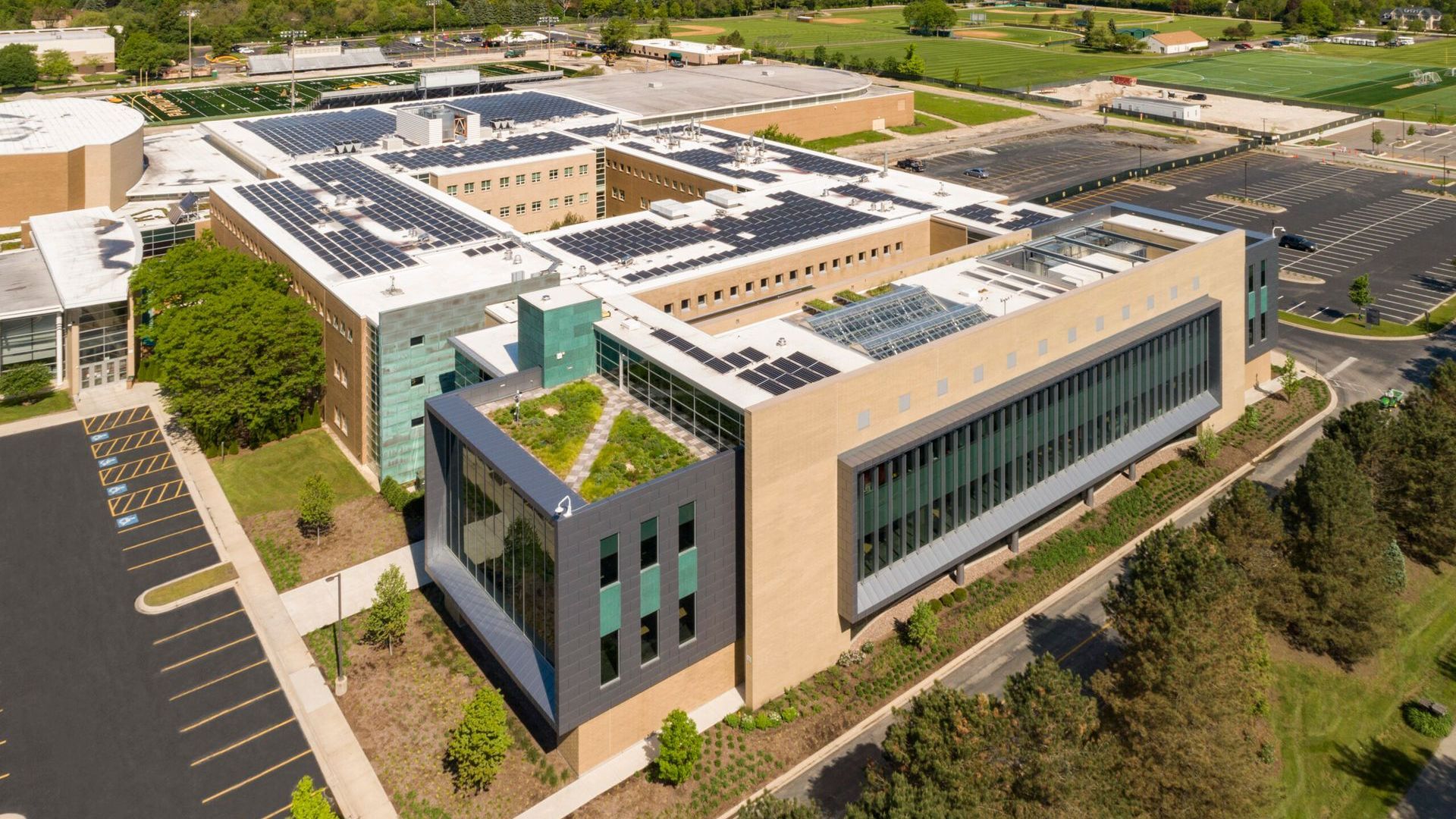
While ICECF’s zero energy buildings program is no longer considering any new applications at this time, the program has supported an impressive 15 of the 16 building projects in the state of Illinois that are verified or “emerging” as net zero energy as of April 2023.
Commonwealth Edison, the largest electric utility company in Illinois (ComEd), provided a $225 million endowment to kickstart ICECF in 1999. Since then, the foundation has worked to improve energy efficiency, advance the development and use of renewable energy resources, and protect natural areas, and wildlife habitat in communities across Illinois. The foundation has awarded more than 5,700 grants.
Now, nearly 24 years later, the grant’s funding is coming to a close soon, making it imperative to take a look at its impact, especially in the path to net zero.
ICECF only funds projects owned by 501(c)(3) organizations or local government agencies serving Illinois — a limitation that ensures the grants are channeled towards initiatives that have a broader public benefit.
The grant program follows a specific payment process, where 60% of the grant amount is disbursed upon completion of the building, and the remaining 40% is provided after 12 months of performance data to prove net zero energy. This payment structure incentivizes building owners to not just design a net zero energy building, but ensure operations meet this achievement. This emphasis on verification leads to a greater emphasis on the building's energy efficiency and overall performance.
“With the grant payment tied to building performance, people are paying attention to how the equipment is performing, and there are a lot of changes that manufacturers are having to make to get the equipment to perform properly,” said Gabriela Martin, Program Director at ICECF.
It's not net zero on paper, it's net zero in performance — an emphasis that requires building teams to look at the full picture of the process, from design, construction, commissioning, and day-to-day operations.
Why do grants like ICECF’s matter?
It’s no secret that building a net zero project is expensive, but grants like ICECF’s minimize cost concerns, so owners can build net zero projects because it’s the right choice for the planet, and the best choice for ongoing financial savings and occupant comfort.
“Net zero projects are doable, but until you show someone, it's hard to kind of clear that hurdle,” Martin said. “We, through our money, can provide examples that become a showcase and a catalyst that tells people, ‘This is possible.’”
The first five net zero energy projects in the state of Illinois were all made possible through financial support from the ICECF Net Zero Energy Building Grant. Without it, it’s unclear what the path forward would have looked like, or how projects like those would have gained traction.
Martin pointed to the emergence of LEED in the early 2000s as an example of how grants can promote change within the industry, and believes net zero buildings can gain momentum in a similar way.
In 2002, ICECF gave a grant to the first LEED certified building in Illinois, at a time when LEED was still new. In 2012, Illinois was recognized as the state with more LEED square footage per capita than any other state, a feat that was made possible in part by grants and government regulations.
“I think our money contributed heavily to the fact that Illinois became the number one state building LEED,” Martin said. “[Illinois] went from being nobody to being number one. How did that happen? Well, there was some money put on the table.”
Now, nearly 30 years later, the next step is to reach net zero. The ICECF Net Zero Energy Building Grant has built a similar kind of momentum to lay a foundation for getting to a net zero future.
Martin recalled, in the late 1990s, some industry professionals were weary about building net zero projects in Illinois because of inherent climate and technology concerns, like a lack of access to consistent solar exposure, or inefficient appliances, like HVAC.
“There is absolutely no excuse at this point. We have the building techniques, the building materials, the existing technology, we have everything that we need to design and build net zero buildings, right here, right now, in Illinois,” Martin said.
What makes a project successful when applying for a grant?
Successful net zero energy projects require several key factors. The ICECF grant focuses on funding projects with a significant impact, strong educational aspects, and committed facilities personnel to manage the completed building.
“Because we are a small foundation, we are limited in who we can make grants to. We don't have the same ability to transform the market, with lots and lots of grants, so what makes a grant successful for us is a project that will have a large impact,” Martin said.
For instance, Martin pointed out that of the program’s 15 grants given out, one has gone toward a community college, four toward K-12 schools, and four toward park districts.
“Those are all entities that have a really strong educational aspect,” Martin said.
Part of the grant’s stipulations require that a project receiving funding “Make education about net zero energy buildings an integral part of the project.” This may include signage, publicly-viewable metering data, an educational exhibition, and more.
The board also looks at a project’s plan for how the building will be managed after completion, which includes technology use and facilities personnel.
“You really need people who are knowledgeable, who are committed, and willing to learn that running a net zero building is a little different than most other buildings,” Martin said. “They are going to be the ones responsible for making sure the building operates and continues to operate as a net zero energy building.”
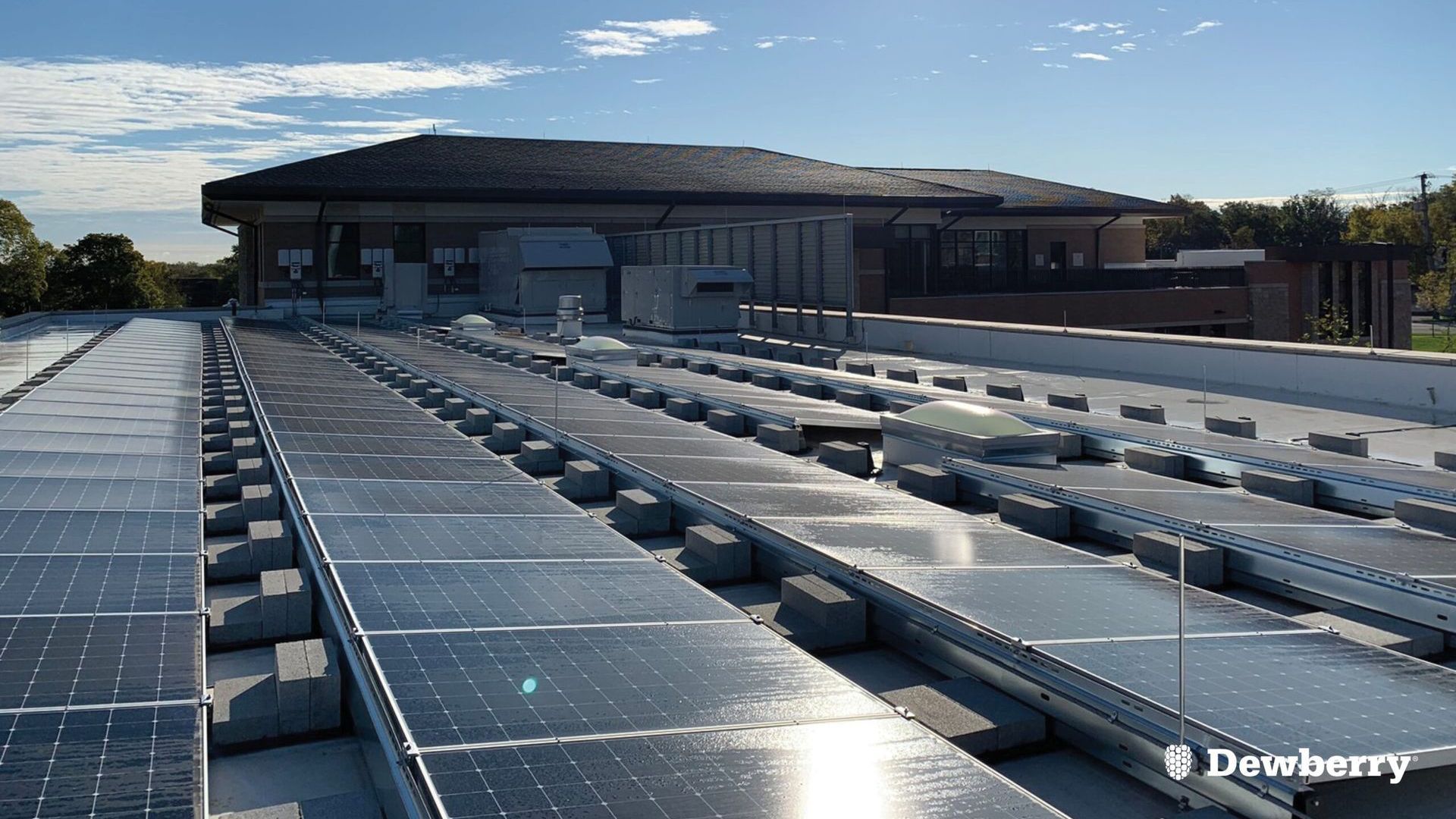
While the ICECF grant has been instrumental in funding net zero energy projects, exploring alternative financing routes is crucial since the grant fund has come to an end.
ComEd New Construction Program
The ComEd Energy Efficiency Program offers incentives for new construction in Commercial, Industrial, and Public Sector projects. While this new program is not directly aimed at incentivizing net zero energy buildings, it encourages more efficient buildings by using energy modeling compared against a baseline. Using the difference in consumption between the actual building and its baseline, ComEd then pays for the building’s excess per kilowatt-hour. ComEd is the same electric provider that funded the Illinois Clean Energy Community Foundation (ICECF) in 1999.
Property-Assessed Clean Energy (PACE) Program
Just this past fall, Governor JB Pritzker and the Illinois Finance Authority launched the PACE (Property Assessed Clean Energy) program to spur investment in electric vehicle charging stations, energy efficiency, and water conservation, and to stimulate the growth of renewable energy and resilient building design throughout Illinois. C-PACE financing can be used by owners and developers of commercial properties to finance or refinance eligible clean energy improvements in connection with the renovation of existing buildings and new construction, in each case up to 25% of the value of the property.
Power Purchase Agreements
Power Purchase Agreements (PPAs) have proven to be effective in financing net zero energy projects across the United States. Under a PPA, a third party, such as a renewable energy developer or utility company, installs, owns, and operates the energy system while the project owner purchases the generated energy at a predetermined rate. PPAs allow project owners to avoid the upfront costs associated with system installation and maintenance. This model has been successful in Illinois, with numerous commercial and municipal entities entering into long-term PPAs to achieve their sustainability goals.
Tax Credits and Tax-Exempt Bonds
Tax credits provide a dollar-for-dollar reduction in the amount of taxes owed, making them an attractive incentive for developers and investors. Tax-exempt bonds provide a way for governments and nonprofits to finance construction projects at a lower interest rate, as the interest earned by bondholders is exempt from federal and state income taxes.By leveraging tax credits and tax-exempt bonds, developers and investors can reduce the upfront costs and lower the financing expenses associated with constructing net zero energy buildings in Illinois.
Department of Housing and Urban Development (HUD) or loans
Affordable housing projects may receive funds from sources such as the Department of Housing and Urban Development (HUD) or loans from local banks.
Adopt a design-build model
Finally, Martin suggests adopting the design-build model may enhance performance accountability and cost control for net-zero buildings, as it allows for early collaboration and continuity throughout the project, similar to the traditional construction process where one entity oversees the entire project.
The Building Energy Resource Hub
While there is an unprecedented amount of resources currently available across the state, federal, and private sectors to fund net zero projects, it can be challenging, even for experienced building professionals, to find and access these resources. That's why Illinois Green Alliance recently launched the Building Energy Resource Hub. The Hub's goal is to act as a one stop resource for navigating energy efficiency funding sources as well as providing training, education, and access to other resources.
A New Landscape
Even with the number of new funding avenues and resources now available, the end of the Illinois Clean Energy Community Foundation Grants will leave the green building community with massive challenges to address. These grants have had an incredible impact kickstarting the net zero movement in Illinois, but making these types of buildings more feasible and commonplace will still require more resources, stronger collaboration, and support from policymakers. Illinois Green Alliance believes that the Hub can address some of these gaps but also hopes to see more individuals and organizations step up and get involved. Explore our involvement opportunities for more ways to support healthy, sustainable buildings for all.